近期成果Highlights见微信公众号“科研真好玩”,可微信扫码访问:

[1]  Scalable high-temperature superconducting diodes enabled by intrinsic Josephson junctions
论文链接:National Science Review 13, nwag285 (2026)
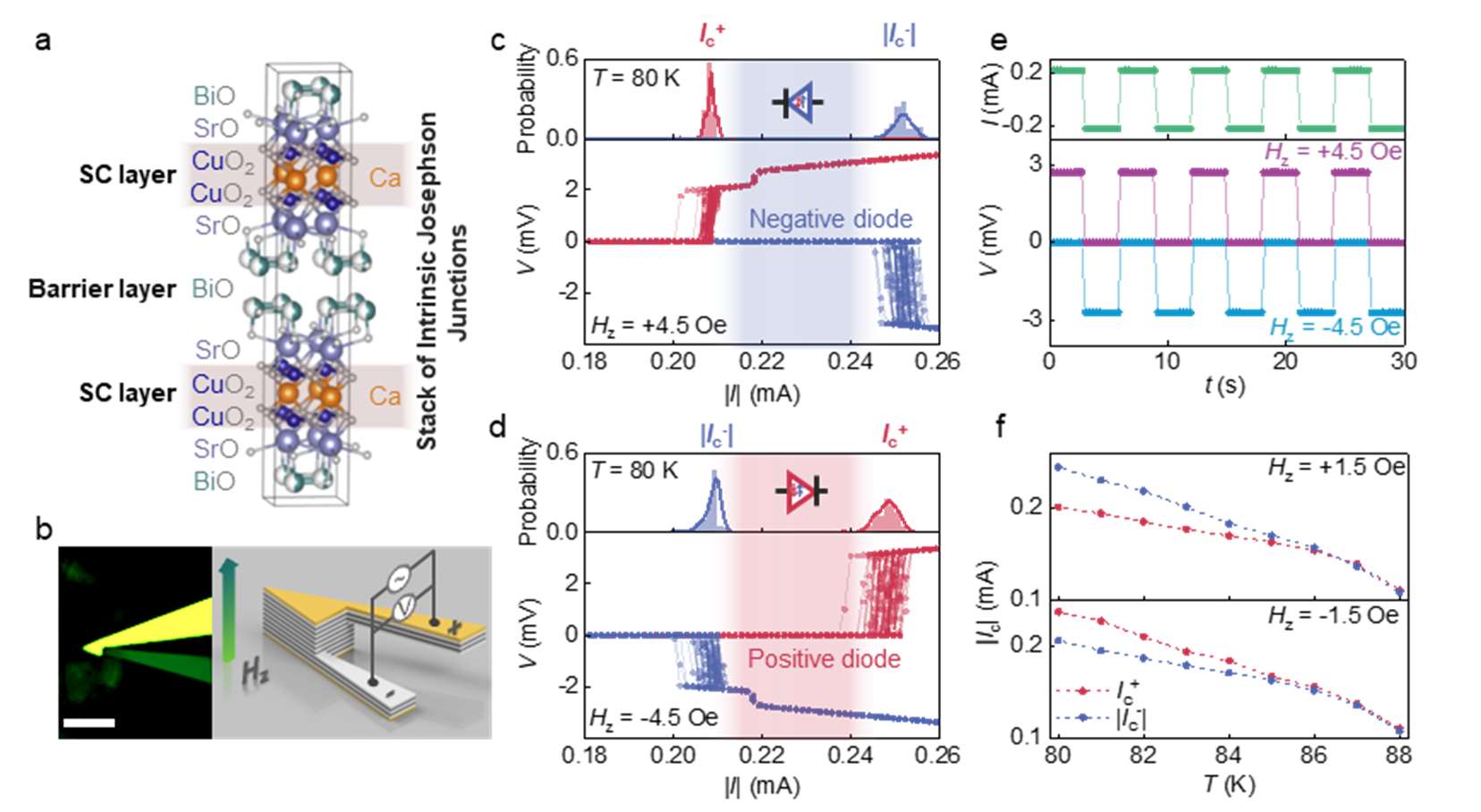
We demonstrated scalable high-temperature superconducting diodes enabled by intrinsic Josephson junctions in the layered cuprate Bi2Sr2CaCu2O8+δ. By controlling the number of naturally stacked junctions and leveraging surface single-junction configurations, we achieve tunable nonreciprocity with efficiencies up to 40% and zero-field programmable memory states persisting up to 86 K—the highest operating temperature reported to date. A microscopic model based on geometry-induced anharmonicity in the current-phase relation, strongly amplified by atomic-scale barriers, underpins the effect, establishing intrinsic Josephson diodes as a robust, lithography-compatible platform for practical superconducting electronics and large-scale arrays containing hundreds of reproducible elements.
[2] Nanoscale Electrothermal-Switch Superconducting Diode for Electrically Programmable Superconducting Circuits
论文链接:Nano Letters 26, 5411 (2026)
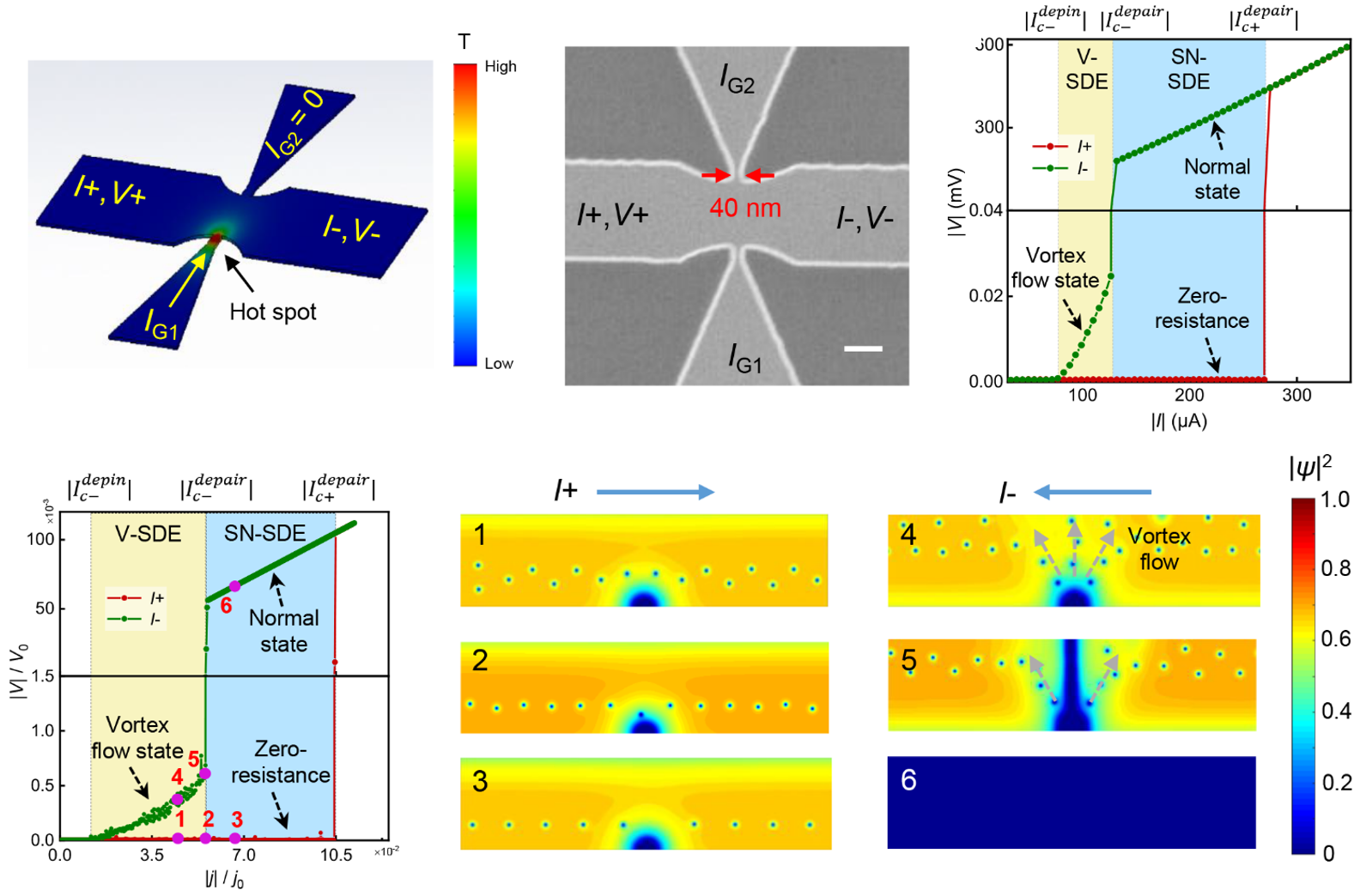
We demonstrated a nanoscale electrothermal-switch superconducting diode by exploiting gate-controlled localized heating that dynamically breaks inversion symmetry in a superconducting nanowire. This enables two distinct non-reciprocal transport regimes—a non-reciprocal superconducting-to-normal transition (efficiency up to 42%) and ratchet-like vortex motion (efficiency up to 60%)—both originating from the same electrothermal-switch mechanism. The diode can be electrically switched on, off, or reversed in polarity in situ, providing a scalable platform for electrically programmable superconducting circuits with reconfigurable full-wave and half-wave rectification.
[3]  Ultra-broadband near-field Josephson microwave microscopy
论文链接:National Science Review 12, nwae308 (2025)
专题报导:“南京大学新闻网”,“科研真好玩”,“中国科学杂志社”...
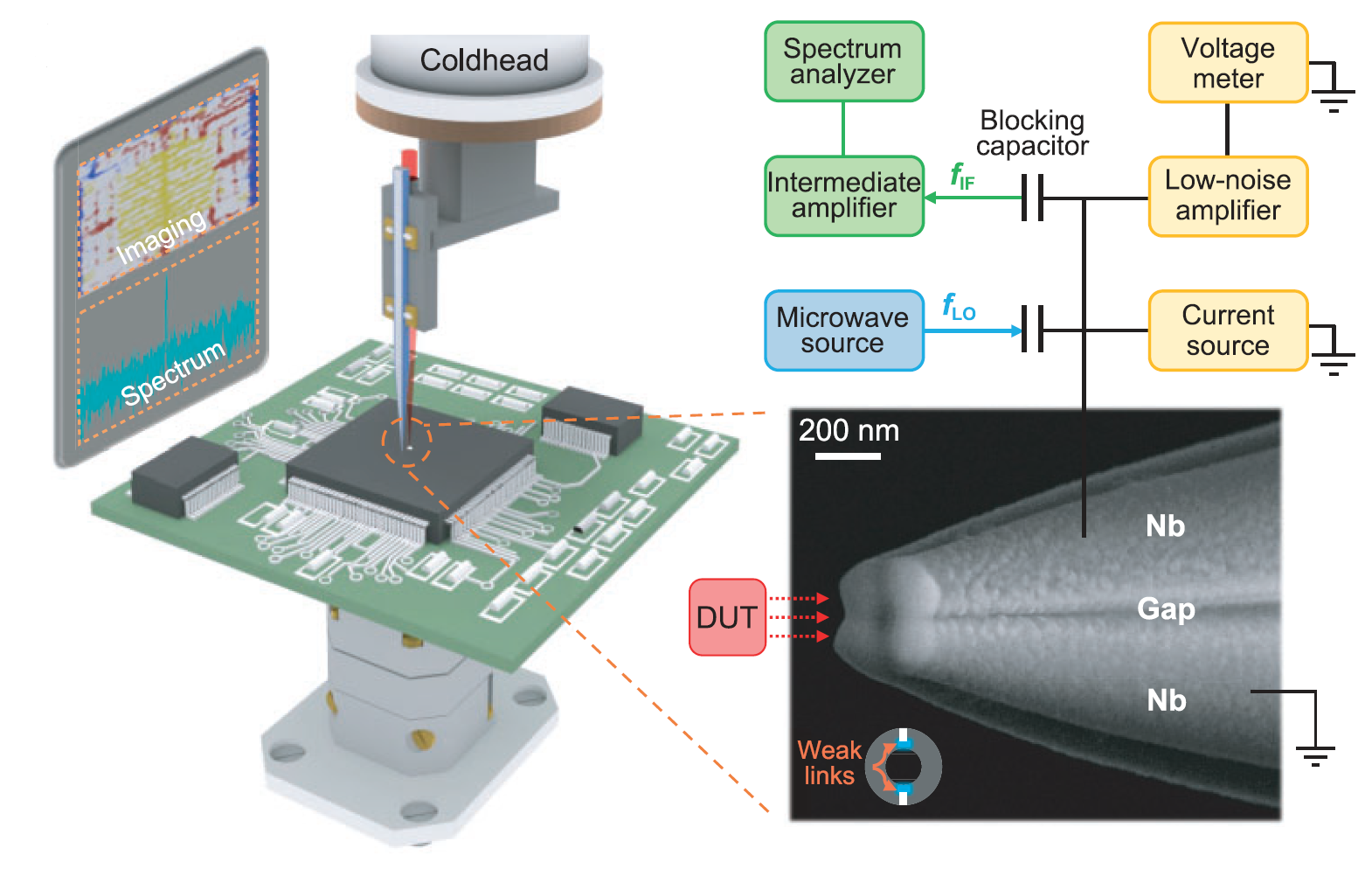
We developed a novel on-tip Josephson microwave microscope by integrating weak-link Josephson junctions directly onto a nanosized quartz tip, realizing a highly sensitive microwave mixer. Operating in a passive and field-free manner, this technique enables ultra-broadband spectroscopic imaging and frequency tracking of near-field microwave distributions with a detecting bandwidth of ≤200 GHz, sub-micrometer spatial resolution, and excellent intensity sensitivity of -72 dBm. Near-field characterizations of various microwave circuits—including coplanar waveguides, voltage-controlled oscillators and interdigital capacitors—demonstrate its capability as a real-time, non-destructive tool to advance integrated microwave devices and quantum technologies.
[4]  Integrated and DC-powered superconducting microcomb
论文链接:Nature Communications 15, 4009 (2024)
专题报导:“南京日报”,“科研真好玩”,“新华社”,“南京发布”,“南京大学新闻网”...
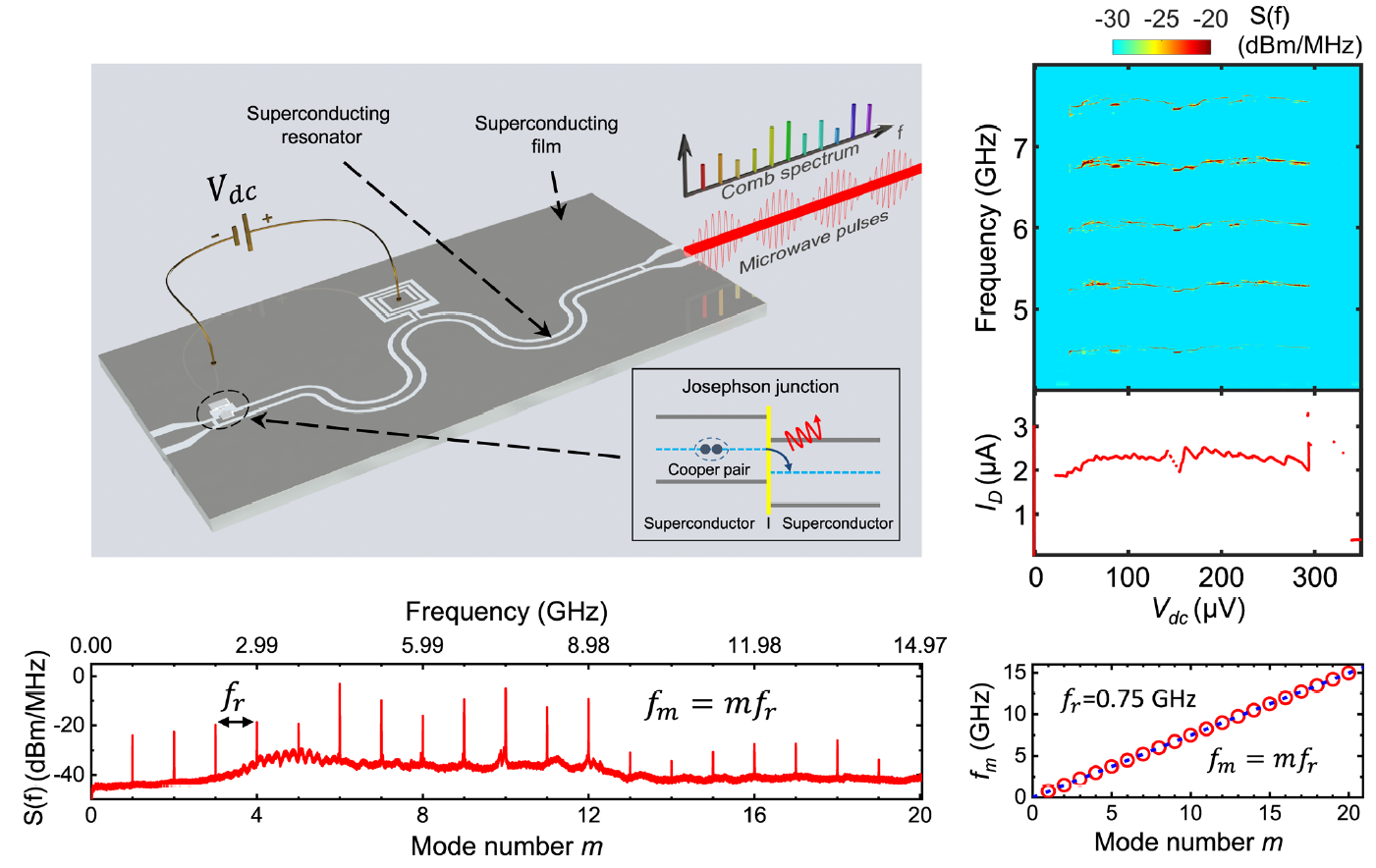
We demonstrated a fully integrated and DC-powered superconducting microcomb by directly coupling a Josephson junction to a superconducting coplanar waveguide resonator. Operating solely with a simple DC bias, this turnkey device achieves self-started coherent frequency comb generation with ultra-low power consumption down to tens of picowatts. The comb spectrum spans multiple octaves in the microwave domain, while a unique coherent injection-locking technique narrows all linewidths to ≤1 Hz. This scalable platform paves the way for energy-efficient on-chip microwave photonics and future integrated quantum processors.
[5]  Toroidic phase transitions in a direct-kagome artificial spin ice
论文链接:Nature Nanotechnology 19, 1101 (2024)
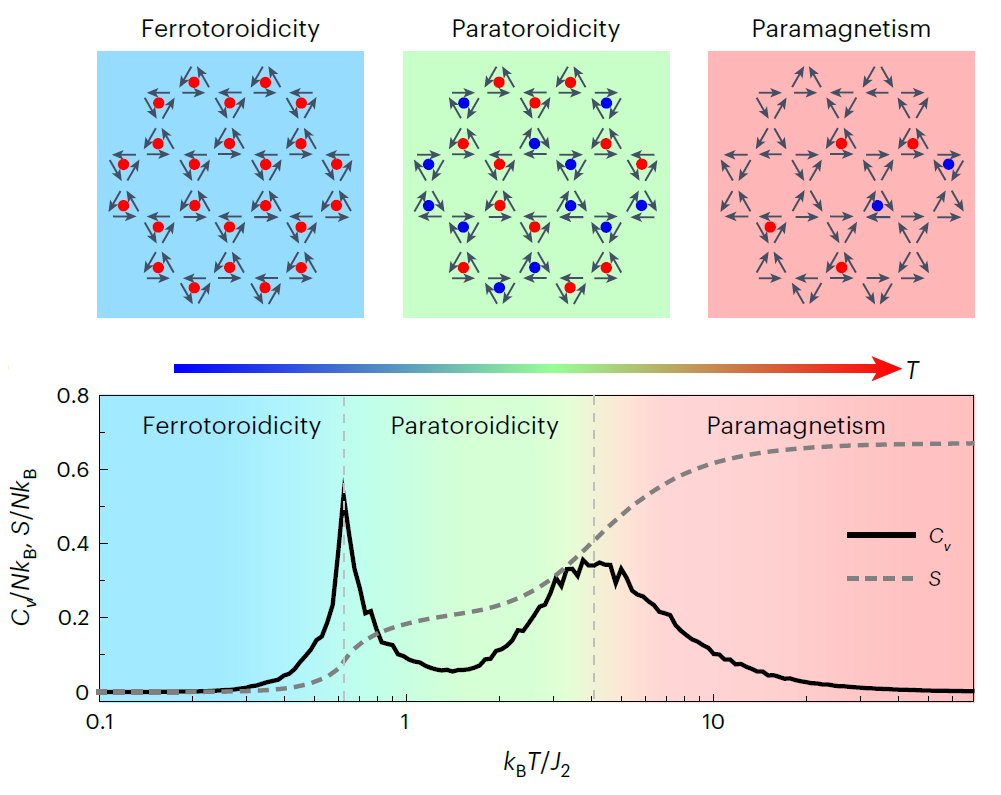
We designed a direct-kagome artificial spin ice that hosts a quasi-degenerate ground state with robust toroidal moments. By tuning the lattice constant to control effective temperature, we experimentally realized a toroidic phase transition between ferrotoroidicity and paratoroidicity, followed by a crossover to a non-toroidal paramagnetic phase. Combining magnetic force microscopy with Monte Carlo simulations, we achieved the first direct visualization of three distinct thermal phases and the long-sought toroidic phase transitions in artificial spin ice.
[6]  Unconventional Superconducting Diode Effects via Antisymmetry and Antisymmetry Breaking
论文链接:Nano Letters 24, 4108 (2024)
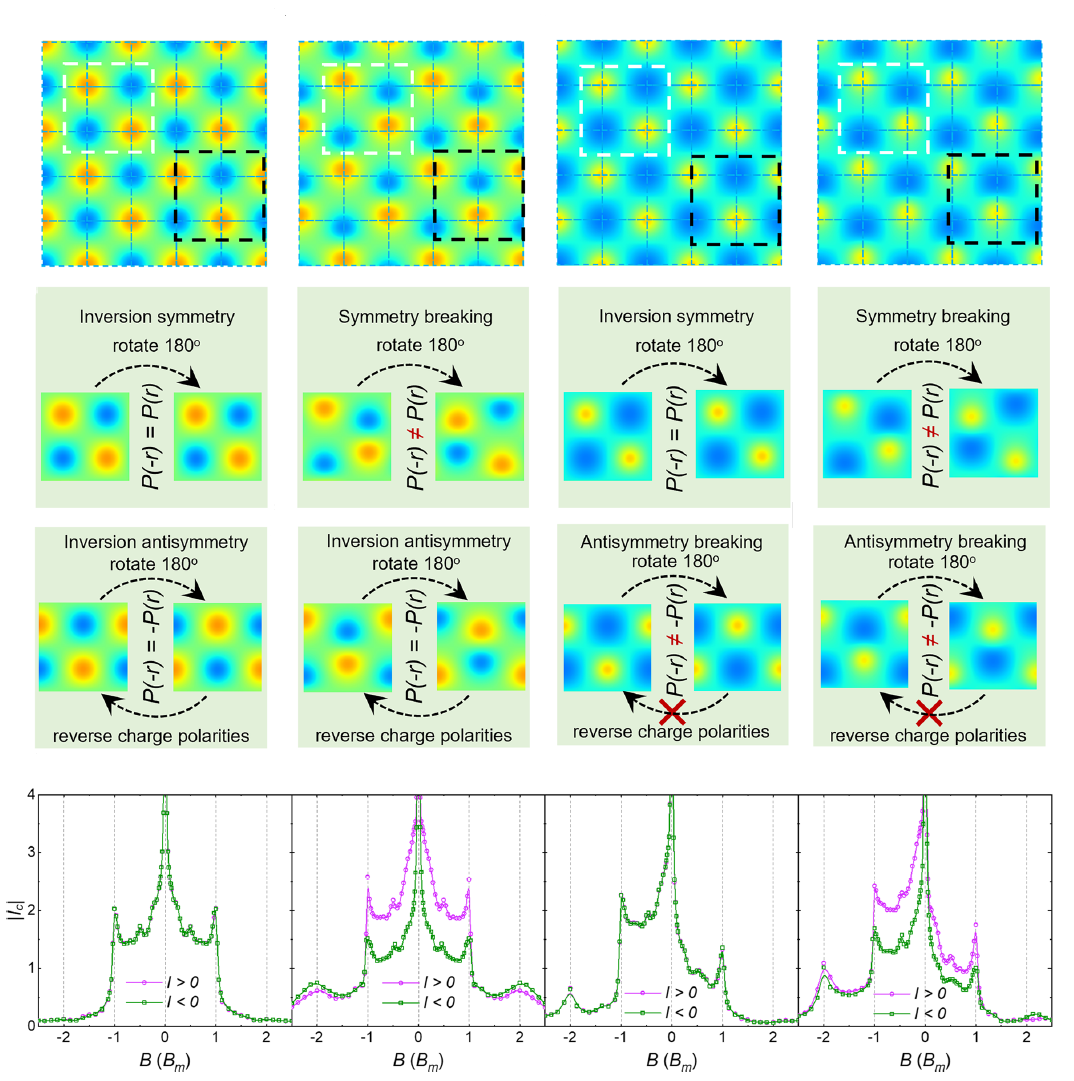
We realized unconventional superconducting flux-quantum diode effects by deliberately engineering inversion antisymmetry and antisymmetry breaking in nanoengineered arrays of nanobar magnets on a superconducting thin film. This yields a magnetically symmetric diode with efficiency up to 20% (current-driven, independent of magnetic field polarity) and an electrically symmetric odd-parity magnetotransport effect (magnetic-field-driven diode). Both effects are nonvolatilely switchable by in-situ magnetization reversal of the nanomagnets, offering a new antisymmetry-based paradigm for superconducting electronics beyond magnetochiral anisotropy.
[7]  Crystallizing Kagome Artificial Spin Ice
论文链接:Physical Review Letters 129, 057202 (2022)
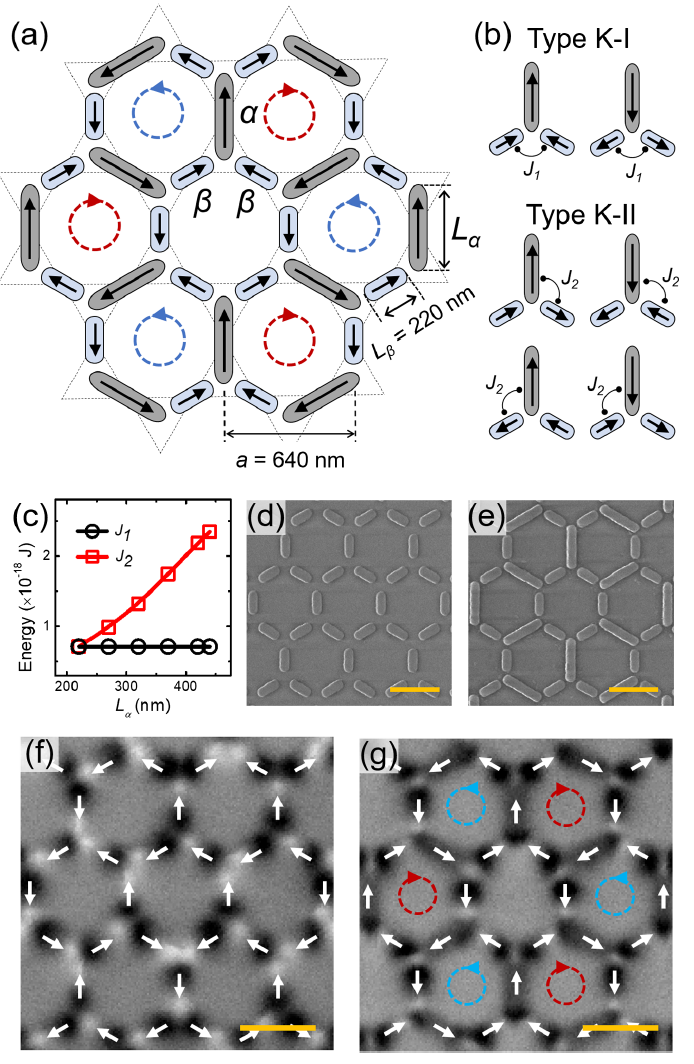
We demonstrated crystallization of kagome artificial spin ice by selectively lengthening one nanobar magnet per vertex to tailor dipolar interactions and reduce vertex degeneracy from sixfold to twofold. This strategy enables the first direct visualization of the long-range ordered spin crystal ground state and the phase transition from spin liquid to crystalline phase in fully disconnected nanomagnet arrays. Combining magnetic force microscopy imaging with Monte Carlo simulations, our method provides a versatile platform to access multiple exotic low-energy ordered phases while preserving long-range dipolar coupling.
[8]  Extended Kohler’s Rule of Magnetoresistance
论文链接:Physical Review X 11, 041029 (2021)
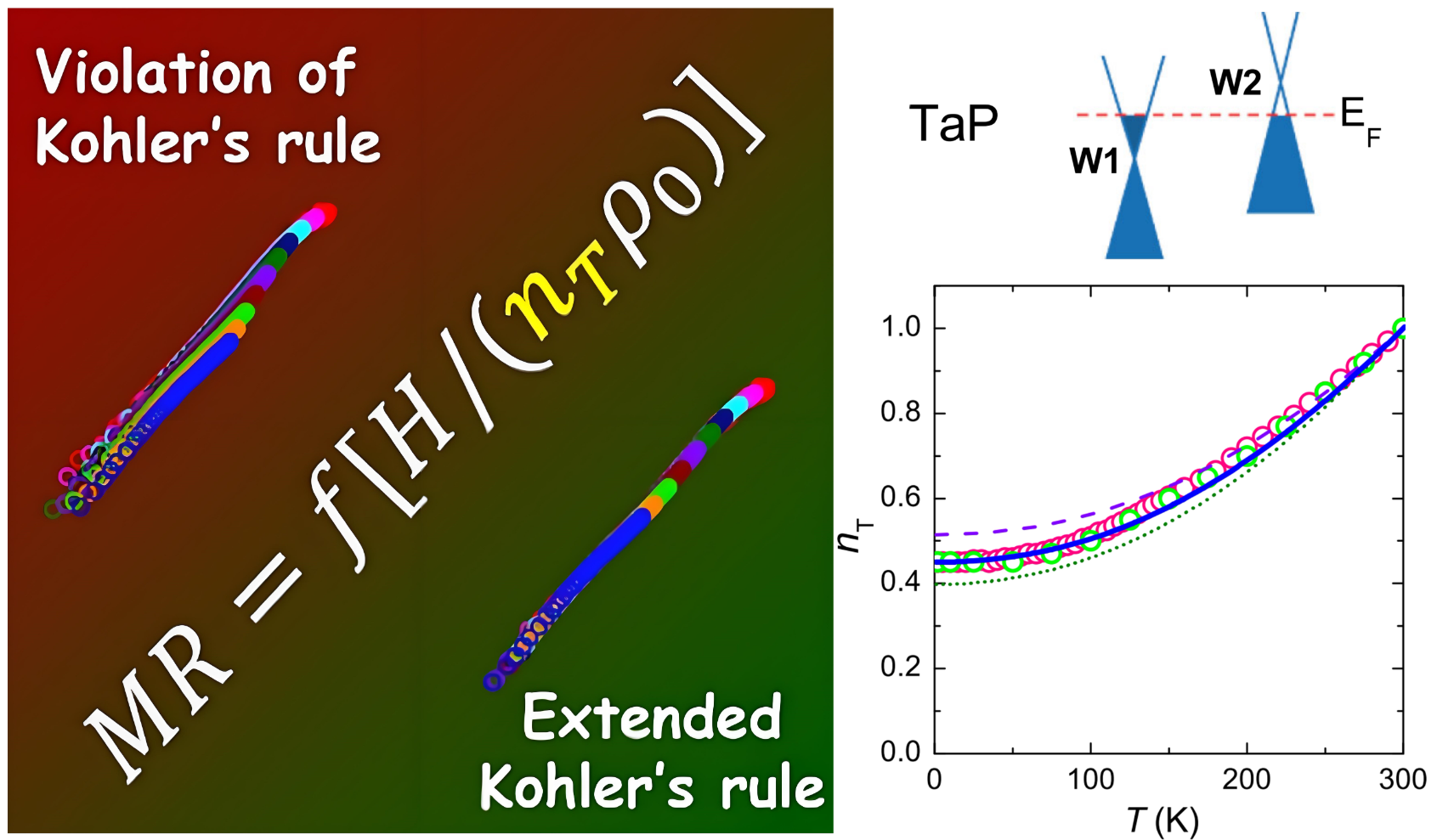
We discovered an extended Kohler’s rule of magnetoresistance in the Weyl semimetal TaP: MR = f[H/(nT ρ0)], where the thermal factor nT accounts for temperature-induced changes in carrier density. This rule explains the violation of conventional Kohler’s scaling, reveals key information on the Fermi level and band dispersion, and resolves long-standing debates on the normal-state magnetoresistance in superconductors (MR ∼ tan²θH). Its generality and validity are further confirmed in the semiconductor InSb, providing a universal framework to probe electronic structures across diverse materials.
[9]  Superconducting diode effect via conformal-mapped nanoholes
论文链接:Nature Communications 12, 2703 (2021)
专题报导:“南京大学新闻网”
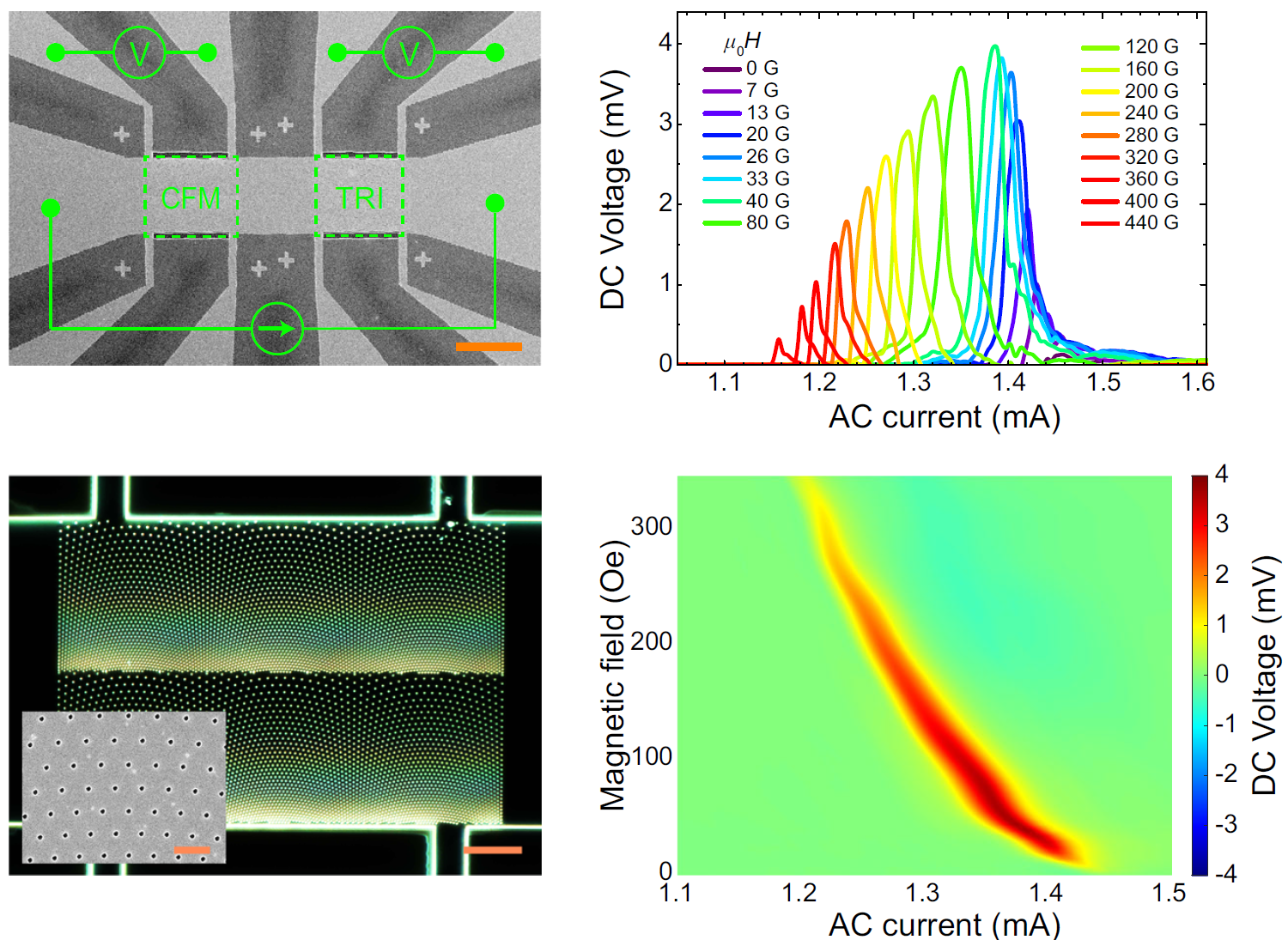
We demonstrated a superconducting diode effect in a conventional MoGe superconducting film by patterning a conformal array of nanoscale holes that breaks in-plane spatial inversion symmetry. This yields a giant rectification signal (three orders of magnitude larger than flux-quantum diodes) arising from nonreciprocal superconducting-to-normal transition, which is switchable and reversible by magnetic field and scalable with temperature. Time-dependent Ginzburg-Landau simulations and quasi-DC probes reveal the mechanism of nonequivalent flux-funneling and Joule heating, providing a versatile platform for dissipationless superconducting electronics applicable to high-Tc materials.
[10]  Reconfigurable Pinwheel Artificial-Spin-Ice and Superconductor Hybrid Device
论文链接:Nano Letters 20, 8933 (2020)
专题报导:“南京大学新闻网”
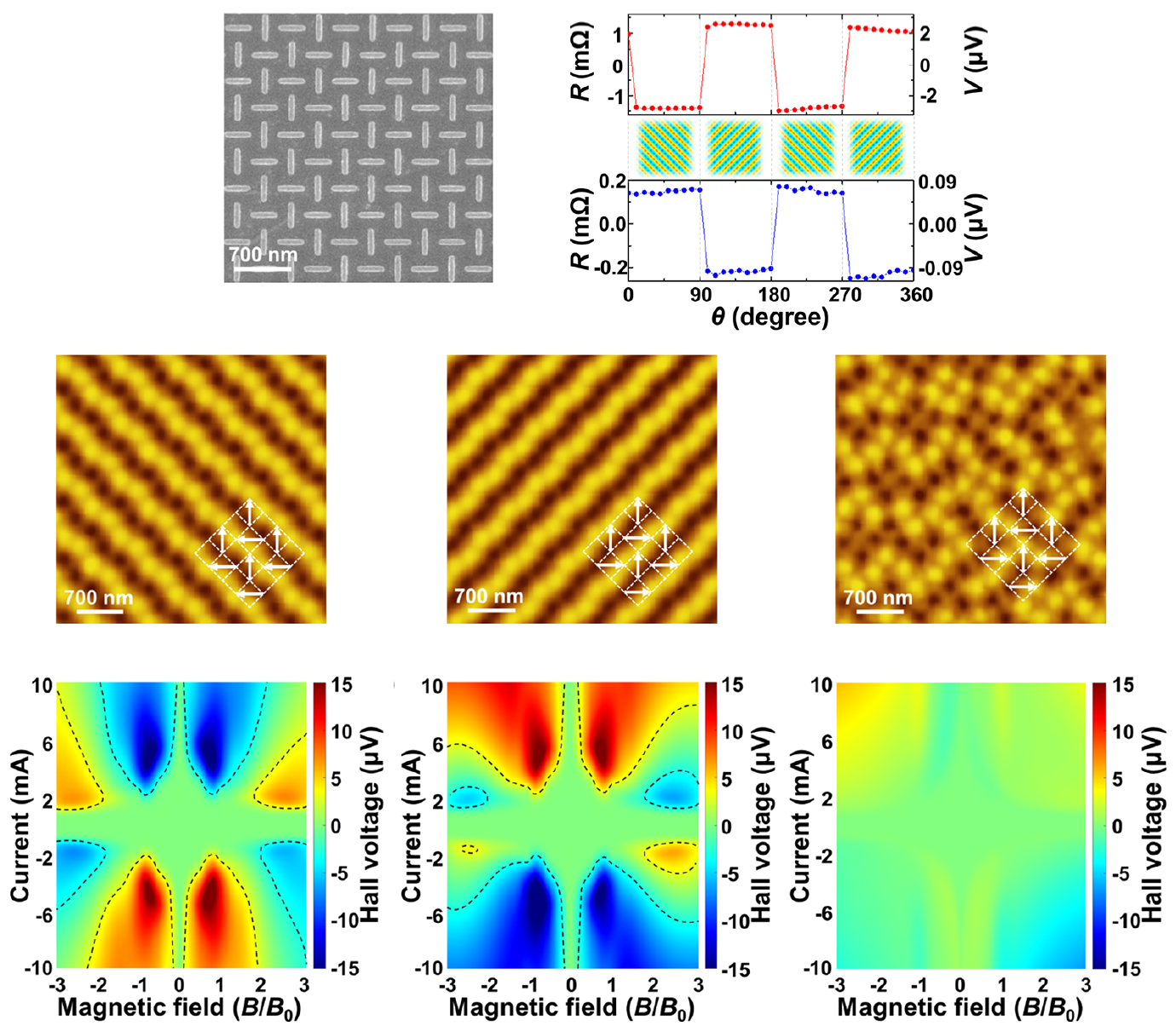
We demonstrated a reconfigurable pinwheel artificial-spin-ice and superconductor hybrid device by patterning a chiral pinwheel ASI array on top of a superconducting film. The in-situ switchable chainlike magnetic charge order creates a programmable pinning potential landscape, enabling a reversible superconducting vortex-flow switch and a programmable vortex Hall effect whose polarity can be nonvolatily reversed by magnetic field amplitude or ASI magnetization orientation. This hybrid system provides a versatile platform for designing reprogrammable superconducting electronics with tunable vortex dynamics.
[11]  Negative longitudinal magnetoresistance in gallium arsenide quantum wells
论文链接:Nature Communications 10, 287 (2019)
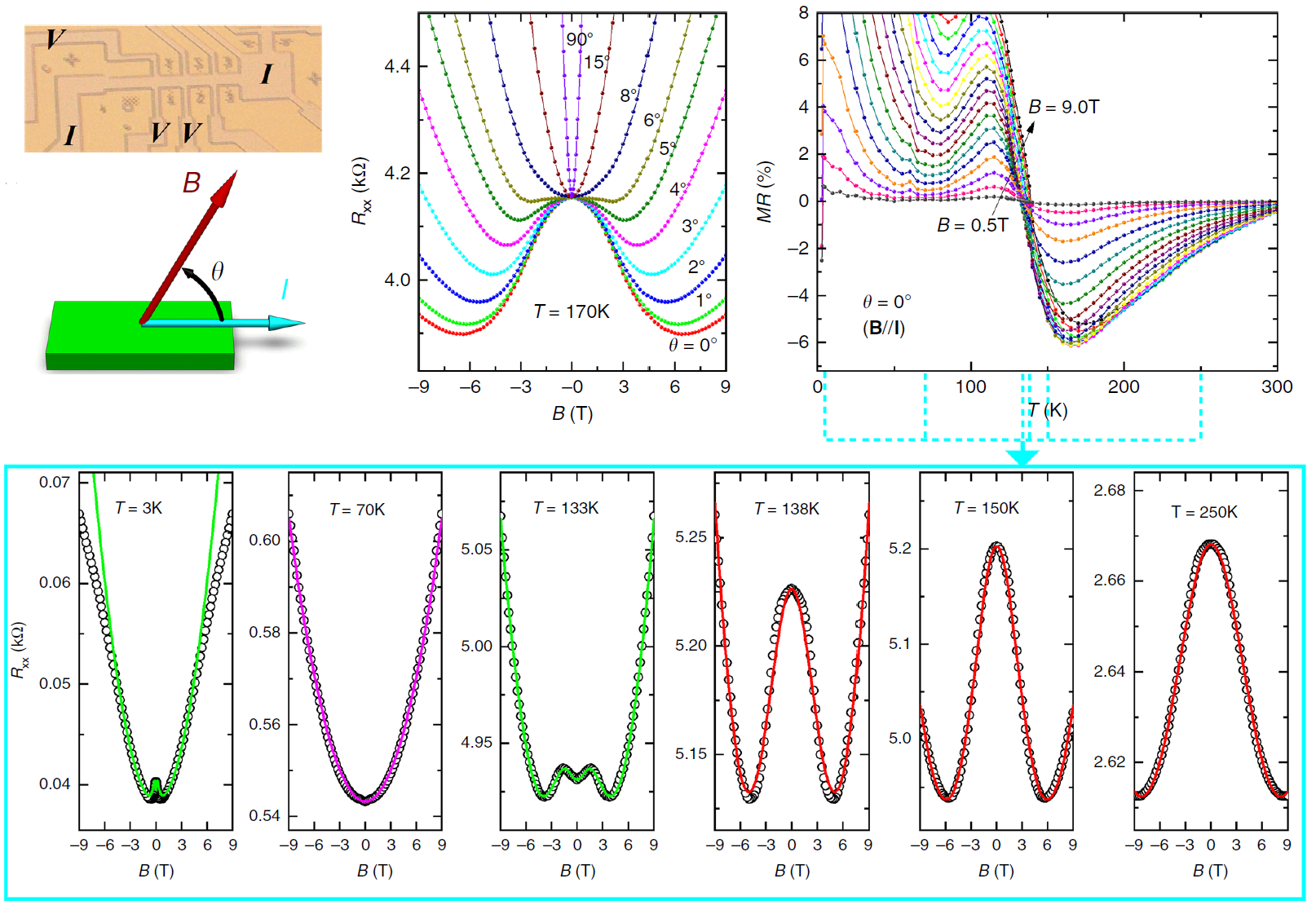
We observed negative longitudinal magnetoresistance in non-Weyl GaAs quantum wells for the first time. The NLMR exhibits both monotonic and non-monotonic magnetic field dependences with intriguing temperature behavior: appearing below 5 K, disappearing at intermediate temperatures, and re-emerging above 130 K up to room temperature. Attributing the observed NLMRs to microscopic disorder, we account for their various features using a phenomenological three-resistor model, providing a new perspective on unusual magnetotransport phenomena in quantum wells and other materials.
[12]  Switchable geometric frustration in an artificial-spin-ice–superconductor heterosystem
论文链接:Nature Nanotechnology 13, 560 (2018)

We demonstrated switchable geometric frustration with high degeneracy in a 2D flux-quantum system by placing a reconfigurable triaxial artificial spin ice on top of a superconducting film. The tunable magnetic-charge configurations enable switching between frustrated and crystallized vortex states, resulting in a reprogrammable resistance state and a reversible vortex Hall effect. This hybrid system provides a versatile platform for designing reprogrammable superconducting electronics with tunable vortex dynamics.
[13]  Parallel magnetic field suppresses dissipation in superconducting nanostrips
论文链接:Proc. Natl. Acad. Sci. 114, E10274 (2017)
专题报导:“南京大学电子学院新闻”
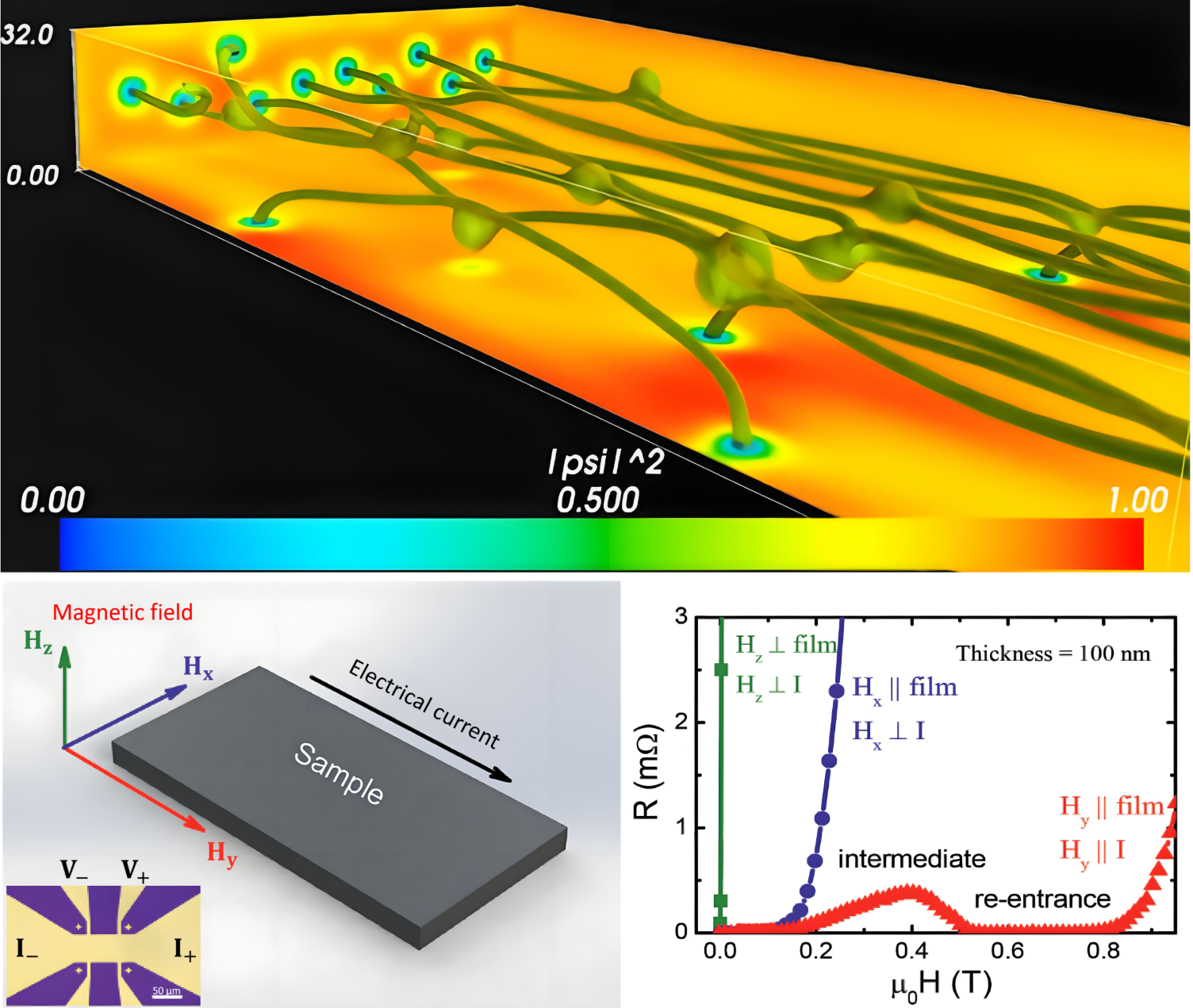
We demonstrated that a parallel magnetic field suppresses dissipation in superconducting nanostrips, leading to a reentrant superconducting state after an initial resistive regime. This surprising recovery originates from vortex crowding, whereby increased vortex density impedes their mutual motion and straightens twisted vortex lines. Large-scale 3D time-dependent Ginzburg-Landau simulations confirm the mechanism and show strong dependence on temperature, current, and strip thickness, providing a new route to radically improve superconducting performance.
[14]  Rewritable artificial magnetic charge ice
专题报导:“新华网”,“科技日报”,“凤凰资讯”,“PhysicsWorld”,“MRS Bulletin”,“Nanotechweb”,
“University of Notre Dame News”...

We designed a rewritable artificial magnetic charge ice by engineering a new spin-ice structure consisting of three sets of nanomagnets oriented in horizontal, vertical, and diagonal directions. This enables in-situ controllable long-range ordering of eight distinct magnetic charge configurations at room temperature, with local write-read-erase functionality achieved via magnetic force microscopy for the first time. Our approach provides a versatile platform for designing magnetic monopole defects, tailoring magnonics, and developing reprogrammable devices for data storage and logic applications.
[15]  Temperature-Dependent Three-Dimensional Anisotropy of the Magnetoresistance in WTe2
论文链接:Physical Review Letter 115, 046602 (2015)
Viewpoint:Electrons Travel Between Loosely Bound Layers Physics 8, 71 (2015)
APS邀请报告:Yong-Lei Wang (Invited Speaker): APS March Meeting, S13.00005 (2016)
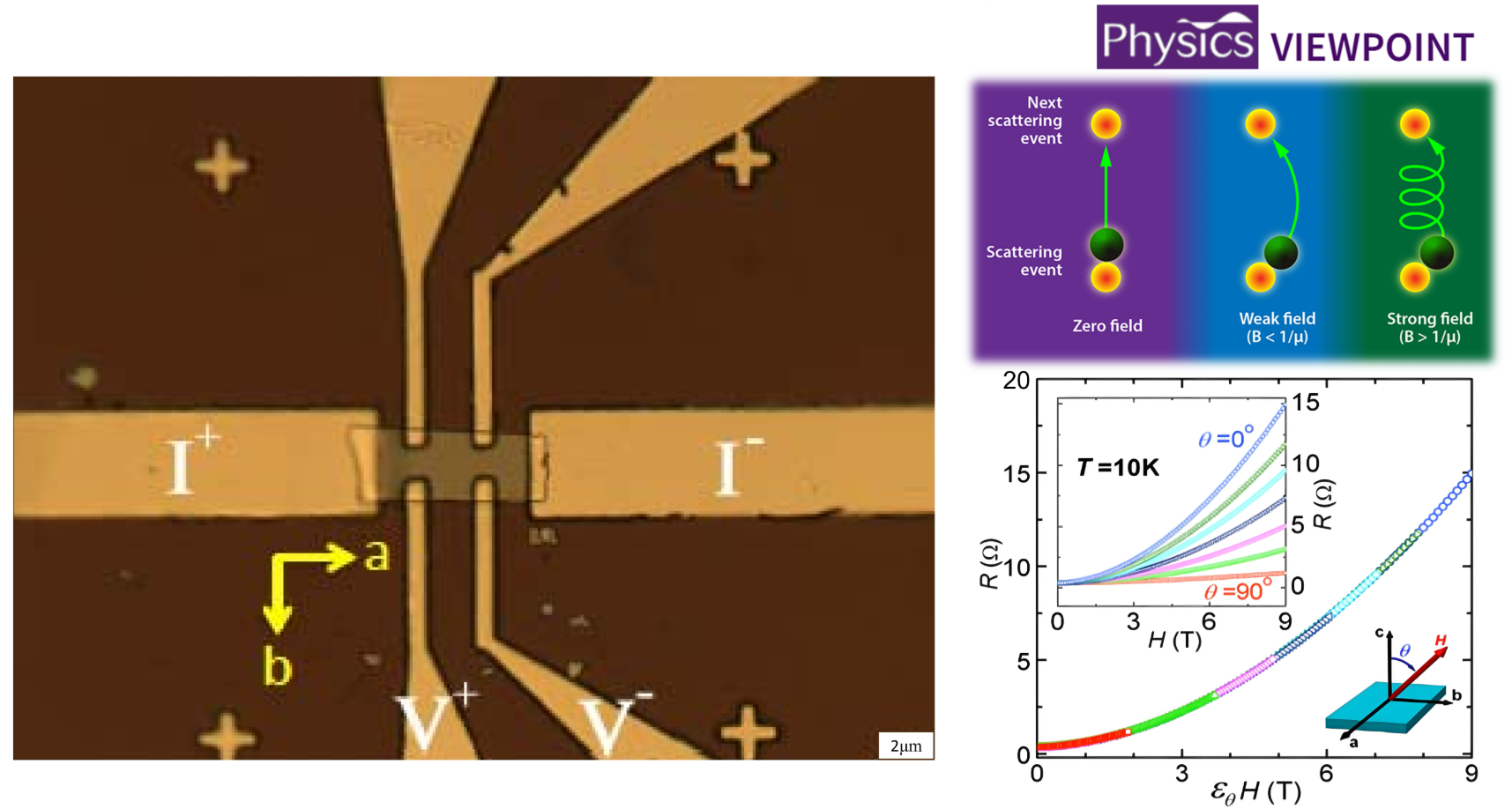
We revealed a rare case of good charge conduction across weakly bound layers in WTe2 and provided a general scaling rule for the anisotropic magnetoresistance. Our results show that WTe2 is electronically 3D with a temperature-dependent mass anisotropy γ (varying from 1.9 to 5), following the scaling behavior R(H,θ) = R(εθ H) where εθ = (cos²θ + γ^{-2} sin²θ)^{1/2}. This offers a new way to probe the electronic band structure and explains the remarkable “turn-on” temperature behavior without invoking a metal-insulator transition.